Discover Our Services
Words Speech Therapy offers many services for
children with communication needs.
Online Therapy
Online speech therapy/tele practice delivers speech-language therapy services using telecommunication technology by linking you and the clinician for assessment, intervention and/or consultation. American Speech-language-Hearing Association (ASHA) recommends telepractice to deliver services for both children and adult. The standard of care is the same as you are seen in person. Technology is only the mode of delivery.
The online assessment is the first step if you need to start speech therapy. Below is the process for how we conduct online speech therapy sessions. You, together with the therapist, can decide what type of service program is best for you and your child.
Step 1: Online Assessment
- Book your appointment through our web appointment system.
- We will share the registration link via Whatsapp. Fill out in the basic details and click submit.
- Your basic details will be analyzed and the assessment will be planned; details about how to prepare and the link to join will be sent to your email.
- Once the assessment is completed, the results and the therapy plan will be discussed.
Step 2: Online Therapy Program
We provide online intervention services in two different ways:
Parent Coaching
Goal: To provide parents with the necessary guidelines to carry out activities that improve the child's speech-language communication skills at home, and to clarify any doubts parents may have.
Suitable for parents of children at basic skill levels with low attention, and for those who are not able to participate in direct online sessions.
2. Direct Online Therapy
Goal: The child will directly interact with the therapist online and train on various speech and language activities using interactive apps and games.
Direct involvement of the child is necessary, with a facilitator — for children who have developed basic speech and language skills, and for older kids.
Make an Appointment
Assessments
A comprehensive speech and language assessment is the first step towards understanding your child's communication abilities and identifying the most appropriate support.
At Words Speech Therapy, we believe that every child has unique strengths, abilities and communication needs. Our assessments aim not only to identify areas of difficulty but also to understand how your child communicates, learns and participates in everyday activities.
What Does the Assessment Involve?
The assessment process begins with a detailed discussion with parents or caregivers to understand their concerns, the child's developmental history and current communication abilities.
Depending on the child's age and individual needs, the assessment may include:
- Parent and caregiver interviews – Understanding developmental history, communication concerns and the child's everyday experiences.
- Clinical observations – Observing the child's communication, interaction and play in structured or natural settings.
- Formal and informal assessments – Using appropriate assessment tools, play-based activities and language samples to explore specific communication skills.
- Collaboration with others – Gathering relevant information from teachers, caregivers and other professionals when necessary.
We recognize that children may communicate differently across environments and with different people. Therefore, information from families and familiar communication partners is an important part of our assessment process.
Areas We Assess
Depending on the concerns identified, the assessment may explore one or more of the following areas:
- Receptive language – Understanding spoken language, instructions, questions and concepts.
- Expressive language – Using words, sentences and language to communicate thoughts, needs and ideas.
- Speech sound development – Speech clarity, pronunciation and speech sound patterns.
- Social communication – Using communication for social interaction, conversation and participation.
- Play and early communication – Developing interaction, shared attention, gestures and communication through play.
- Fluency – Speech fluency, including stammering.
- Voice – Voice quality, pitch and other aspects of vocal communication.
- Literacy-related language skills – Language abilities that support reading, writing and learning.
How Long Does an Assessment Take?
The assessment duration varies depending on the child's age, communication needs and the areas requiring evaluation.
An initial assessment typically takes approximately one hour. Some children may require additional sessions or observations to develop a more comprehensive understanding of their communication abilities.
We aim to make the assessment process comfortable, engaging and responsive to each child's needs.
Assessment Findings and Recommendations
Following the assessment, parents will receive feedback about their child's communication strengths, areas requiring support and recommended next steps.
A written assessment report can provide:
- A summary of relevant developmental and communication history
- Assessment findings and clinical observations
- Identification of communication strengths and difficulties
- Clinical impressions or diagnosis, where appropriate
- Recommendations for intervention, further assessment or referral
- Guidance for parents, caregivers and teachers
Not every child who attends an assessment will require ongoing speech-language therapy. Where appropriate, we may recommend parent coaching, home-based strategies, monitoring or consultation with other professionals.
Making Informed Decisions Together
We believe that assessment is more than identifying a difficulty. It is an opportunity to understand your child, recognize their abilities and work together to make informed decisions about the support they may need.
Our goal is to provide families with a clear understanding of their child's communication development and practical guidance for the next steps.
Make an Appointment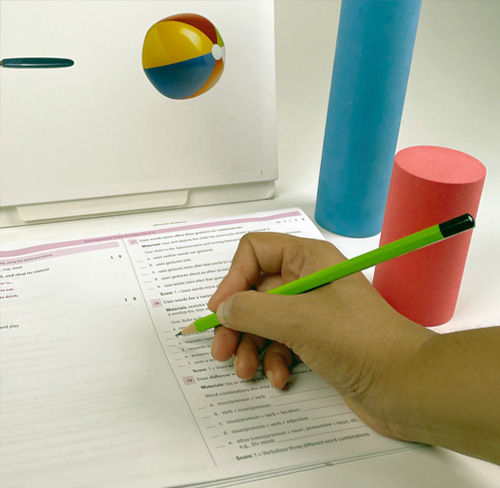
Speech Therapy
Speech therapy sessions always follow a detailed assessment. Usually, a session lasts 45-60 minutes. A range of specific goals is developed as part of your child's therapy program, individually tailored to their needs. We have seen children progress faster and better when parents are actively involved in the intervention program.
Individualised Therapy to Support Meaningful Communication
At Words Speech Therapy, we provide individual and small-group speech-language therapy sessions tailored to each child's communication needs, strengths and developmental goals.
Therapy begins with a comprehensive speech and language assessment to understand the child's current abilities, identify areas requiring support and develop an individualised intervention plan. Therapy goals are discussed with parents, ensuring that families understand the focus of intervention and how they can support progress at home.
Individual Therapy Sessions
Individual therapy sessions provide one-to-one support between the child and a qualified speech-language therapist. Sessions typically last 45–60 minutes and involve carefully planned activities designed to address specific speech, language and communication goals.
Our therapists use a combination of play-based, naturalistic and structured approaches, depending on the child's age, abilities and learning needs. Therapy goals are regularly reviewed and adjusted according to the child's progress.
Small-Group Therapy Sessions
We also offer small-group therapy sessions with a maximum of three children, where appropriate.
Group sessions provide opportunities for children to develop and practise communication skills through meaningful interactions with peers. These sessions may focus on:
- Social interaction and communication
- Conversational skills and turn-taking
- Listening and responding to others
- Cooperative play and shared activities
- Using communication skills in everyday social situations
Children are considered for group sessions based on their individual communication goals, developmental needs and readiness to participate. Group therapy may be recommended alongside individual sessions or as part of a child's ongoing intervention plan.
Working Together with Families
We strongly believe that parents and caregivers are essential partners in the therapy process. Communication development extends beyond the therapy room, and opportunities for learning occur throughout everyday routines and interactions.
Our therapists work closely with families to share practical strategies, discuss progress and support the use of newly developed skills at home and in other environments.
Session Frequency and Progress Reviews
The frequency and duration of therapy are determined collaboratively with parents, considering the child's individual needs, therapy goals, progress and family circumstances.
Progress is monitored regularly, and therapy plans are reviewed and modified to ensure that intervention remains relevant, meaningful and responsive to the child's development.
Our aim is not simply to help children develop new skills during therapy sessions, but to support them in using those skills confidently and meaningfully in everyday life.
Make an Appointment
Resources
These speech therapy materials were designed by an experienced speech-language pathologist and used with kids who need various levels of support to grasp speech and language skills. Parents have observed that it is easy to get kids engaged in speech therapy practice at home. Go ahead and browse to find what your child will benefit from.
Shop Now
Parent Coaching Programs
Supporting Parents to Support Their Child's Communication
At Words Speech Therapy, we believe that parents play an essential role in their child's communication development. Our parent coaching sessions are designed to help families understand how children learn language and develop practical strategies to support communication through everyday interactions, play and daily routines.
We offer parent coaching based on two internationally recognized, evidence-informed Hanen programs:
It Takes Two to Talk®
For parents of young children with language delays
The It Takes Two to Talk® program helps parents of young children who are late to talk or experiencing delays in language development.
Through structured coaching, parents learn to recognize their child's communication attempts, respond meaningfully and create more opportunities for language learning during everyday activities.
The program focuses on helping parents build their child's communication skills naturally, rather than relying solely on structured teaching activities.
More Than Words®
For parents of autistic children or children with social communication difficulties
The More Than Words® program supports parents in understanding and developing their child's social communication skills.
It focuses on helping children connect with others, engage in meaningful interactions, develop play skills and communicate more effectively in everyday situations.
Parents learn practical strategies tailored to their child's individual communication stage, strengths and interests.
Learning Together, Growing Together
Our parent coaching approach recognizes that communication development does not happen only during therapy sessions. By empowering parents with knowledge, practical strategies and ongoing guidance, we aim to make everyday interactions meaningful opportunities for communication and connection.
Our goal is to help parents feel confident, supported and actively involved in their child's communication journey.
Email: [email protected]
Phone: +94 76 422 1555